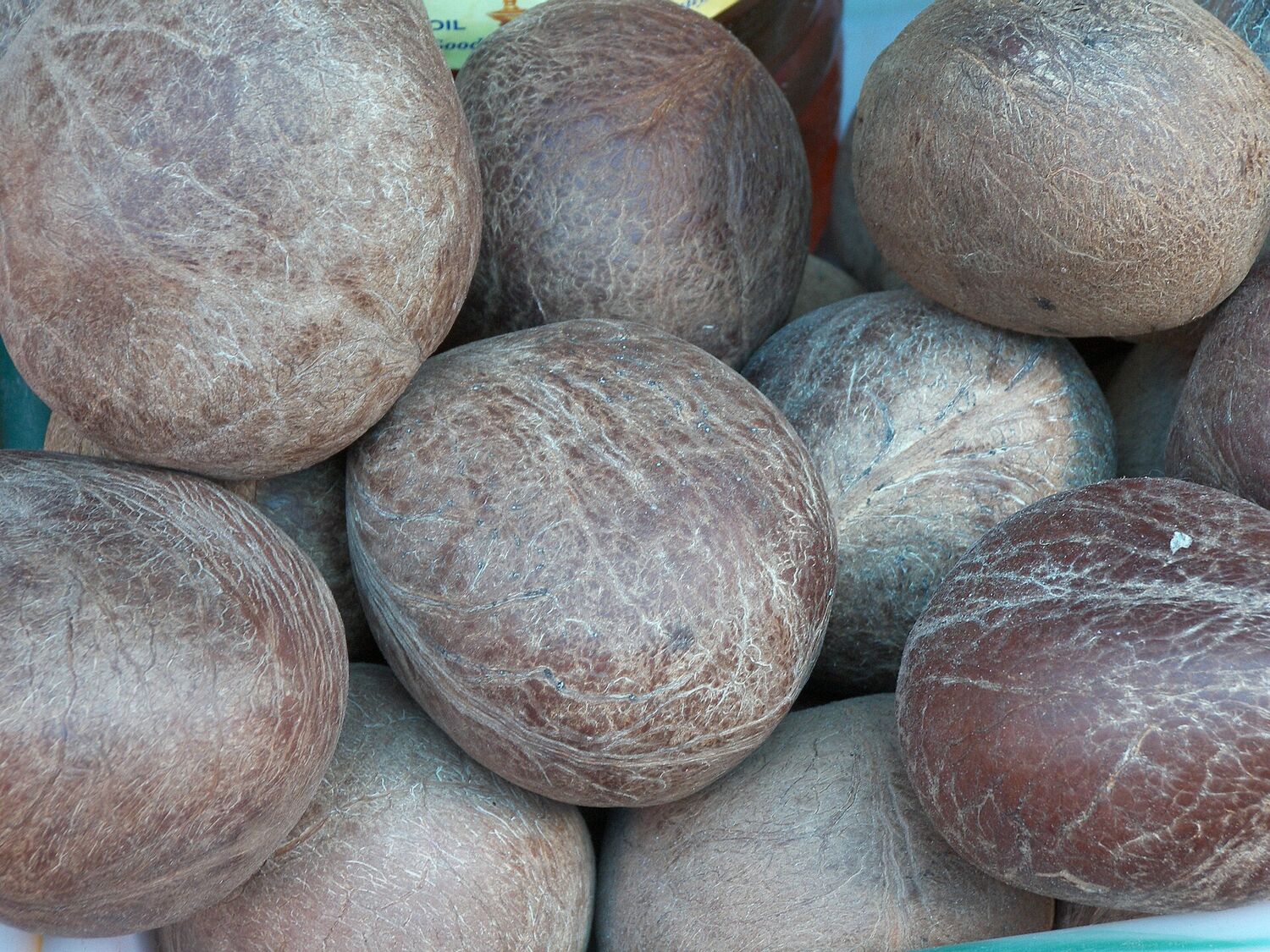
By-products · புண்ணாக்கு punnakku

The cake that's left when we've pressed the oil

Punnakku is the solid cake of seed and nut that stays behind after we wood-press the oil, and it's far too good to throw away. It's a natural, protein-rich feed for livestock and a gentle natural fertiliser for the soil. On a chekku, nothing is wasted.

Waste-to-value

One pressing, two harvests

When the marachekku turns slowly through a batch of copra, groundnut or sesame, oil flows out and a dense cake stays in the mortar. That cake is punnakku. Because we press mechanically and gently, no hexane, no chemical extraction, the cake holds on to a good share of the protein, fibre and minerals from the original seed.

For generations, farmers in Tamil Nadu have fed punnakku to their cattle and worked it back into their fields. We carry on the same simple logic: the oil goes to your kitchen, and the cake goes to the byre or the soil. It is the whole-seed idea we write about on our sustainability page, using every part of what the farm gives.

Three kinds of cake

Coconut, groundnut and sesame punnakku

Each cake behaves a little differently, because the seed behind it does. Here's an honest look at what each one offers and where it fits.

Coconut · thengai punnakku

Best for ruminants

Coconut (copra) cake carries roughly 20–25% protein and is high in fibre. That fibre makes it best suited to ruminants, dairy and beef cattle, sheep and goats, whose stomachs are built to handle it. Feed it as a measured part of the ration; your vet or feed adviser can help you set the right quantity.

Because of that high fibre, copra cake is less suited to poultry and pigs.

Groundnut · kadalai punnakku

High-protein supplement

Groundnut cake is rich in protein, commonly around 40–55%, which makes it a strong protein supplement for ruminants, and it can be fed to poultry at moderate levels.

It is a generous feed, but it must be stored carefully. See the honest note below before you buy.

Sesame · ellu punnakku

Rich in methionine

Sesame cake is high in protein and notably rich in the amino acid methionine, which complements lysine-rich feeds nicely in a balanced ration.

A useful cake to pair with others when you're building up a feed mix.

Storage matters

An honest word about groundnut cake

We'd rather tell you this plainly than let you find out the hard way.

Important, keep groundnut cake dry. Damp storage lets mould grow on groundnut cake, and that mould can produce aflatoxin, a toxin that can carry through into milk. Reject any batch that smells musty or shows mould. Store the cake cool and dry, off the ground, and use it promptly. Good storage prevents the problem, but please don't ignore it.
All oil-rich cakes: because they still hold some natural oil, punnakku can eventually turn rancid. Store it dry, away from heat, and use it within a reasonable time rather than letting it sit for months.

Back to the soil

Oil-cake as natural manure

Punnakku isn't only feed. Worked into the soil or composted, oil-cake is a long-standing natural fertiliser that returns nitrogen and nutrients to the ground as it breaks down. It's a quiet way of closing the loop, what came from the field goes back to the field.

Whether you want cake for your cattle, your crops, or both, tell us what you're after and we'll point you to what's currently being pressed.

At a glance

A quick comparison

Rough, honest guidance, your vet or feed adviser can help you balance a full ration.

Oil-cake Approx. protein Best suited to Notable for
Coconut (thengai punnakku) ~20–25% Ruminants, cattle, sheep, goats High fibre; feed as a measured part of the ration
Groundnut (kadalai punnakku) ~40–55% Ruminants; poultry at moderate levels High protein, store dry (aflatoxin risk)
Sesame (ellu punnakku) High protein Livestock rations; fertiliser Notably rich in methionine

All three are also usable as natural fertiliser/manure.

Buying punnakku

How we sell it

Punnakku is best used fresh from pressing, so rather than holding large stocks, we match what you need to what is currently being pressed. Tell us when and how much you want, and we will let you know what is available.

  • Form: [whole cake / broken / ground, Pon Vayal to confirm]
  • Pack sizes: [pack sizes, Pon Vayal to confirm]
  • Minimum order: [minimum order, Pon Vayal to confirm]
Freshness: punnakku is best used fresh from pressing, tell us when you need it and we will match you to what is currently being pressed. Store it cool, dry and off the ground, and reject any musty or mouldy batch.
Sun-dried copra (dried coconut) before pressingSun-dried copra, before pressing

Questions

Oil-cake, answered honestly

Punnakku is the solid cake of seed and nut that remains after we wood-press the oil. Because the marachekku presses gently rather than extracting with solvents, the cake keeps a good share of its protein and fibre, which is exactly what makes it a natural feed and fertiliser. Nothing is wasted.

Damp storage lets mould grow on groundnut cake, and that mould can produce aflatoxin, a toxin that can carry through into milk. Keep the cake cool, dry and off the ground, reject any batch that smells musty or shows mould, and use it promptly. We won't hide this; it's a real risk that good storage prevents.

Yes. We sell coconut, groundnut and sesame oil-cake for feed and fertiliser use. Tell us the type, the quantity and how you intend to use it, and we'll let you know what's currently being pressed and available. You can start an enquiry on our contact page.

Punnakku is best used fresh from pressing. Because it still holds some natural oil it can eventually turn rancid, so store it cool, dry and off the ground, and use it within [period, Pon Vayal to confirm]. Reject any musty or mouldy batch, for groundnut cake especially, damp storage risks aflatoxin.

Bulk & feed enquiries

Need punnakku for your cattle or your fields?

Tell us the type of oil-cake, the quantity and how you'll use it. We'll let you know what's being pressed and arrange a quote, feed-grade or fertiliser-grade.